

Gum Disease: Understanding Symptoms, Causes & Treatment Options
Take control of your dental health by learning the signs of gum disease, ways to lower your risks, and understanding your treatment options.
-

 By the Midtown Dental Group Team

Have you noticed an uptick in the sensitivity of your teeth and gums? Do your gums look swollen or bleed every time you brush your teeth? You may be suffering from periodontal disease, more commonly known as gum disease.
Our knowledgeable Midtown Dental Group team is here to help you understand the ins and outs of gum disease including signs and symptoms, common causes, and treatment options to get your smile back on track.
What Is Gum Disease & What Causes It?
Gum disease arises when the soft tissues (gums) become infected and inflamed. This condition typically occurs due to a lack of good oral hygiene. When plaque (a sticky coat of bacteria) isn’t properly removed from the teeth and gumline when brushing and flossing, it begins to accumulate and thicken. Over time, this residual plaque builds up on your teeth and hardens into tartar, which creates a breeding ground for bacteria and can trigger the onset of periodontal disease.
Signs & Symptoms of Gum Disease
There are a wide range of signs and symptoms that may appear when perio disease is present. Some of the most common ones include:
- Bleeding gums
- Changes in bite
- Chronic bad breath
- Foul, bitter taste in mouth
- Gum discoloration (red or purple)
- Gum recession
- Loosening teeth
- Sensitivity when chewing or biting down
- Sore gums
If you are currently experiencing any of the symptoms above, we highly recommend contacting our Midtown Dental Group team to schedule a periodontal consultation right away. The sooner you seek treatment, the less likely it is to cause lasting damage to your smile.
Stages of Gum Disease
This disease doesn’t start out as a full-blown infection. It’s an infection that gradually breaks down soft tissue over time. It starts as gingivitis and moves to periodontitis as the infection advances:
Gingivitis

Known as the first stage of gum disease, gingivitis occurs when plaque begins to build up along the gumline. Initial signs include bleeding gums when brushing and flossing along with swollen, puffy gums. Gingivitis is completely reversible, which is why it’s so important to try and catch it as early as possible!
Periodontitis
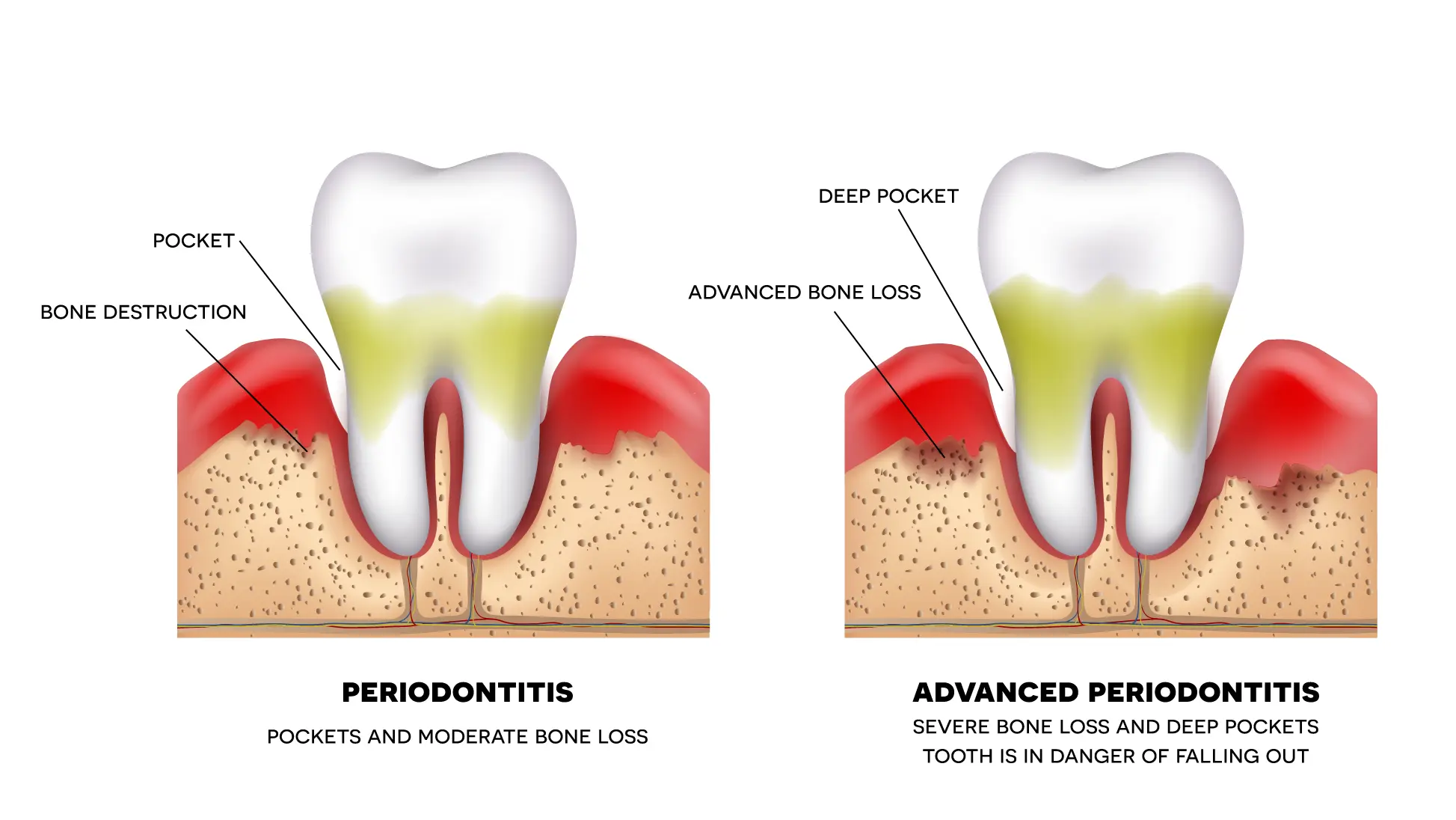
As the infection progresses from gingivitis to periodontitis, the harmful bacteria sneaks below the gumline and starts eroding the teeth, jawbone, and supporting soft tissue. Once gingivitis becomes periodontitis, you may notice your gums pulling away from your teeth, loosening teeth, chronic bad breath, and abscesses on your gumline.
Treatment Options for Gum Disease
Without proper dental care and treatment, this disease can wreak havoc on your teeth and cause long-term dental problems, such as loosened teeth, jawbone degradation, and more! Our recommended treatment plans will vary case-by-case based on how advanced the disease is. Treatments can include:
- Professional Dental Cleanings: Gingivitis can often be treated with regular, routine dental cleanings and an improved at-home oral hygiene regimen.
- Scaling & Root Planing: Also known as deep cleanings, scaling and root planing provides a more in depth removal of plaque and tartar at and below the gumline. After the plaque is removed, a special tool can smooth the gums to help encourage them to reattach to the teeth.
- Antibiotics & Oral Rinses: Used in conjunction with dental cleanings and other treatments, antimicrobial rinses can help dramatically reduce bacteria levels in the oral cavity.
- Laser Gum Therapy: This treatment path utilizes a minimally invasive laser to remove harmful bacteria and diseased gum tissue. Laser gum therapy also helps promote gum regrowth.
- Bone Grafts: If your periodontitis has caused bone loss, bone grafts can help replace and regenerate your bone to strengthen and support your teeth.
- Periodontal Surgery: Periodontal surgery covers a wide scope of treatments that can help reduce pocket size, rebuild lost bone structure, cover exposed roots, and assist with soft tissue and bone regrowth.
Final Thoughts
Your gums play a crucial role in your oral and overall health. It’s important to stay on top of your biannual dental appointments and to schedule additional visits if concerns arise. When left untreated, periodontal disease can have a serious impact on your smile and leave you with irreversible dental issues. Prioritizing your gum health today can help you preserve your smile and your health for years to come.
Gum Disease FAQs
What factors increase my risk of developing gum disease?
While these factors won’t necessarily cause it on their own, they can play a contributing role in the onset of periodontal disease:
- Genetics
- Hormones
- Lack of proper nutrition
- Medications that cause dry mouth
- Poor oral hygiene
- Smoking
Can gum disease be reversed?
Early stages of gum disease (gingivitis) are completely reversible with improved oral hygiene, professional dental cleanings, and smoking cessation (if applicable). However, once the disease progresses into advanced periodontitis and bone loss occurs, it can’t be fully reversed.
Is gum disease contagious?
While gum disease isn’t contagious like a common cold, it can be passed to other people. The bacteria that causes gum disease can be spread through saliva when kissing or sharing drinks. Maintaining good oral hygiene and attending regular dental visits can help minimize your risk.
How do I know if I have gum disease?
There are some visual indicators that may point to the presence of gum disease. Some signs include, but are not limited to, swollen, bleeding, or tender gums, bad breath (halitosis), and gum recession. However, the only way to know for sure is to schedule a dental consultation for an official diagnosis. Once our experienced dental team determines that it’s gum disease, they will help you craft a specialized treatment plan based on your unique needs.
Is gum disease curable?
The infection itself can be treated and eradicated. However, depending on the stage of the disease, you may be left with permanent damage to your gums, bone, and teeth from the bacteria.
Do I need surgery for gum disease?
It depends on the severity of the infection and how advanced your gum disease is. There are many non-surgical treatment options available for handling early to moderate stages. However, if you have advanced periodontitis with deep pockets at your gum line, bone loss, or loosening teeth, you may need periodontal surgery to halt the progression and restore the impacted areas.
Schedule Your Periodontal Consultation
Discover the Difference
If you’re overdue for a dental cleaning or are currently experiencing signs of gum disease, please don’t hesitate to contact Midtown Dental Group to schedule your dental consultation. Our experienced dental team is dedicated to helping you achieve and maintain a lifetime of great oral health!


